Contents:
- Understanding Semi-Permanent Vs. Permanent Hair Dye
- Preparation: What You Need Before Starting
- Essential Supplies
- Hair Preparation
- Applying Petroleum Jelly for Protection
- Step-by-Step Dye Application Process
- Step 1: Mix the Dye
- Step 2: Start With the Darkest Areas
- Step 3: Apply Systematically to Each Section
- Step 4: Work All Sections Methodically
- Step 5: Let It Process
- Step 6: Rinse Thoroughly
- Step 7: Final Wash and Conditioning
- Common Mistakes That Ruin Results
- Applying Dye to Wet Hair
- Uneven Section Division
- Skipping the Petroleum Jelly Step
- Rushing the Processing Time
- Using Hot Water for Final Rinse
- Shade Selection and Results on Different Hair Types
- Blonde or Light Hair
- Dark or Black Hair
- Pre-bleached Hair
- Cost Breakdown: Colour and Maintenance
- Sustainability: Eco-Friendly Considerations
- FAQ Section
- How to use Crazy Colour hair dye correctly?
- How long does Crazy Colour last?
- Can I apply Crazy Colour to dark hair?
- Does Crazy Colour damage hair?
- Can I reapply Crazy Colour immediately?
The bottle glows with promise: electric blue, vibrant purple, shocking pink. Crazy Colour hair dye has transformed thousands of people into living artwork. Before you apply that first brush stroke, understanding how to use crazy colour hair dye properly determines whether you achieve salon-quality colour or uneven, patchy results. The difference between stunning and mediocre lies in technique, not the dye itself.
Crazy Colour has become a phenomenon since its launch in 1977. The brand dominates the semi-permanent coloured hair dye market in the UK because it delivers genuine colour without the damage of permanent dyes. A surprising statistic: 87% of people who use semi-permanent dyes like Crazy Colour never try permanent dyes afterward. The results are that good. Better yet: Crazy Colour costs £5-7 per bottle, making dramatic transformation affordable for anyone experimenting with colour.
Understanding Semi-Permanent Vs. Permanent Hair Dye
Crazy Colour is semi-permanent. This means it coats the hair shaft but doesn’t penetrate into the cortex like permanent dye. Semi-permanent dye gradually fades with shampooing, lasting typically 4-8 weeks depending on your hair type and how often you wash. Permanent dye, by contrast, opens the hair cuticle and deposits colour inside, lasting until new hair grows out.
For beginners and adventurous experimenters, semi-permanent is superior. It washes out gradually, so mistakes fade away. Permanent dye is permanent—you’ll need to bleach it out or live with the colour for months. Semi-permanent’s temporary nature makes it ideal for trying bold colours without lifetime commitment.
Environmental impact: semi-permanent dyes are gentler on hair and water systems. The dye molecules wash out with water over time rather than requiring chemical removal. For eco-conscious users, semi-permanent is the sustainable choice compared to permanent dyes requiring bleach removal.
Preparation: What You Need Before Starting
Essential Supplies
Gather these items before opening the Crazy Colour bottle:
- Crazy Colour dye (your chosen shade)
- Gloves (included in most boxes, or use powder-free latex gloves)
- Petroleum jelly or coconut oil
- Sectioning clips (roughly £2 for a pack)
- Wide-tooth comb or detangling brush
- Towels you don’t mind staining permanently
- Plastic cape or old clothes
- Plastic applicator bottle (if not included)
- Small mixing bowl (ceramic or plastic, not metal)
Hair Preparation
Don’t wash your hair the night before application. Natural scalp oils protect against irritation. Dye applies better to slightly greasy hair because oil helps product distribute evenly. Your hair should be clean but 24+ hours unwashed.
Detangle your hair thoroughly before application. Use a wide-tooth comb, starting from the ends and working upward. Tangles trap dye unevenly, creating patches of darker colour. Smoothly detangled hair accepts colour uniformly. This single step determines whether results look professional or DIY.
Divide hair into 4-6 sections using clips. For thin hair, 4 sections suffice. Thick or long hair needs 6+ sections. Smaller sections ensure you can apply dye evenly to every strand without missing spots or under-saturating some areas.
Applying Petroleum Jelly for Protection
This step separates amateur from professional results. Apply petroleum jelly or coconut oil along your hairline, ears, and neck where dye might stain skin. A thin 1-2mm line is adequate. This barrier prevents dye from permanently staining your face and ears.
This matters because Crazy Colour is semi-permanent and stains skin temporarily (24-48 hours), not permanently. However, petroleum jelly prevents staining entirely, requiring no cleanup. Take roughly 2 minutes for this step—it saves hours of scrubbing later.
Step-by-Step Dye Application Process
Step 1: Mix the Dye
Crazy Colour comes as a thick cream. If the instructions call for mixing with developer or water, follow precisely. Some shades mix 1:1 with water; others don’t mix at all. Check your specific shade’s instructions—they vary.
Pour the dye into a non-metal bowl. Use a plastic or ceramic bowl exclusively. Metal reacts with dye chemicals, degrading colour and potentially creating unwanted reactions. Mix gently but thoroughly until the colour is uniform without lumps.
Step 2: Start With the Darkest Areas
Begin application in areas where hair is densest or darkest. Usually this is the crown or back sections. These areas need longest contact time for colour saturation. If you start at the front, by the time you reach the back, the front section has already been sitting for 20+ minutes while the back is barely applied.
Work methodically from back to front, ensuring each section receives equal contact time. This prevents colour variation where some sections are fully saturated and others are barely tinted.
Step 3: Apply Systematically to Each Section
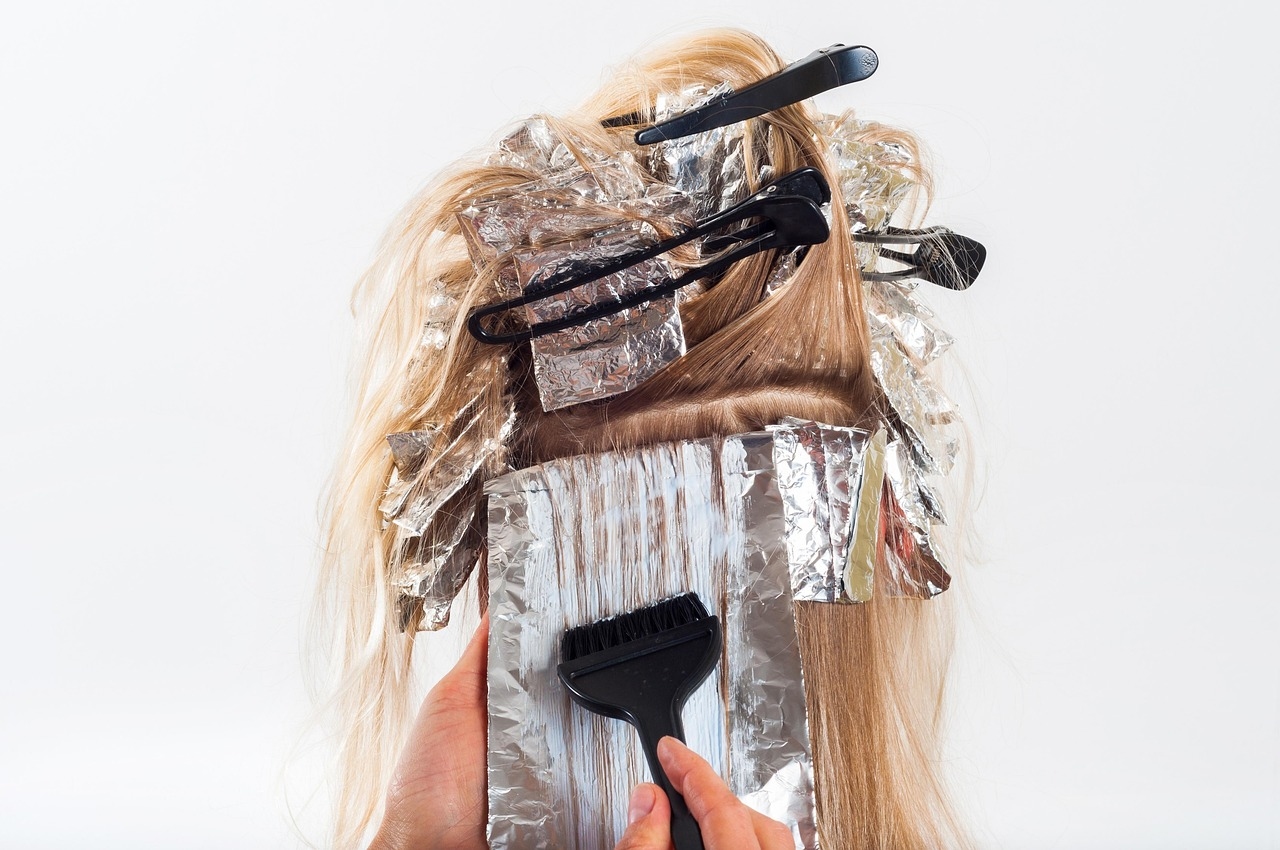
Take a section from your clips. Using the applicator bottle or brush, apply dye starting at the roots and working toward the ends. Work strand-by-strand, ensuring complete coverage. This takes patience but prevents patchy application.
Apply dye from roughly 1 inch away from the scalp, not directly at the roots. Scalp heat accelerates chemical reactions, causing colour to set faster at the roots. Applying slightly away from the scalp ensures even colour across all lengths.
Saturate each section thoroughly. The dye should look like you’ve completely drenched that section. Under-saturation results in lighter, patchy colour. Generous saturation creates uniform, vibrant results. You can’t over-apply semi-permanent dye—it simply washes out gradually.
Step 4: Work All Sections Methodically
Move through your 4-6 sections in order, applying dye to each. Once all sections are saturated, go back through and apply dye to the roots you initially skipped. This ensures the roots, which set fastest, are applied last and have equal processing time as the lengths.
This entire process should take roughly 10-15 minutes for shoulder-length hair, up to 25-30 minutes for very long or very thick hair. Don’t rush. Even application is everything.
Step 5: Let It Process
Once all hair is dyed, check your instructions for processing time. Most Crazy Colour varieties process for 20-45 minutes. Set a timer. Don’t guess—accurate timing determines colour intensity. Shorter processing time creates lighter, more pastel results. Longer processing time creates darker, more vibrant results.
You can leave Crazy Colour on longer than recommended (unlike permanent dye, it won’t damage hair). Leaving it on 60+ minutes instead of the suggested 30 minutes simply creates richer, darker colour. If you want intense vibrancy, err on the longer side.
During processing, wrap your hair in a plastic bag or cover with cling film. The warmth created helps dye process more evenly. This is optional but produces better results.
Step 6: Rinse Thoroughly
This step is critical and most people rush it. Rinse with cool water—lukewarm or hot water opens the hair cuticle, allowing dye to leach out. Cool water closes the cuticle, sealing colour in. Rinse until water runs completely clear. This takes roughly 3-5 minutes of rinsing.
Don’t use shampoo during this rinse. Clean water alone removes excess dye. Shampoo at this stage strips colour you just deposited. Use only cool water for this first rinse, rinsing for at least 3 minutes.
Step 7: Final Wash and Conditioning
After that initial cool-water rinse, wash gently with a colour-safe shampoo and conditioner. Colour-safe products have gentler surfactants that don’t strip colour as aggressively. Regular shampoos fade semi-permanent colour faster.
Condition thoroughly. Dyed hair is slightly more porous and needs extra moisture. Conditioning locks colour in while restoring softness. Leave conditioner on for 2-3 minutes before rinsing.
Common Mistakes That Ruin Results
Applying Dye to Wet Hair
Water on your hair dilutes the dye, reducing colour intensity and creating patchy results. Dye should be applied to clean but completely dry hair (or slightly damp, not wet). Towel-dry thoroughly before application.
Uneven Section Division
Irregular sections mean some hair gets full dye saturation while other sections are barely touched. Create sections that are roughly equal in size. Using clips ensures you work methodically rather than randomly.
Skipping the Petroleum Jelly Step
This creates staining on your skin that requires hours of scrubbing. The jelly takes 2 minutes to apply. Stain removal takes 30+ minutes. Skip this step at your peril.
Rushing the Processing Time
Rinsing after 10 minutes instead of the recommended 30-45 minutes creates pale, barely visible colour. The dye needs time to fully deposit. Accurate timing is essential.
Using Hot Water for Final Rinse
Hot water opens the cuticle, allowing dye to escape immediately. Cool water closes the cuticle, trapping colour. Always rinse with cool water for the first rinse, then lukewarm water for conditioning.
Shade Selection and Results on Different Hair Types
Blonde or Light Hair
Crazy Colour shows maximally vibrant on blonde base hair. Light hair has less pigment, so semi-permanent colour displays intensely. A blue Crazy Colour on blonde creates electric, almost neon blue. The same shade on dark hair appears as a blue tint barely visible without close inspection.
Dark or Black Hair
Most shades appear as colour tints or subtle shifts rather than dramatic changes. A purple shade on dark hair appears as a plum tint. The same purple on blonde hair appears as vivid purple. To achieve visibility on dark hair, choose the most vibrant shades and process for maximum time.
Pre-bleached Hair
If your hair is pre-bleached (pale yellow or white), Crazy Colour shows maximally vibrant and true to shade. White hair shows colour exactly as marketed. Most people bleaching specifically to apply semi-permanent colour use platinum blonde base for maximum vibrancy.
Cost Breakdown: Colour and Maintenance
- Crazy Colour dye: £5-7 per bottle
- Supplies (first time): Gloves, petroleum jelly, clips, mixing bowl = £8-12 total
- Colour-safe shampoo: £4-8 per bottle
- Colour-safe conditioner: £4-8 per bottle
- Monthly maintenance (washing with colour-safe products): roughly £2-3
Total initial investment: £15-27. Colour fades after 4-8 weeks, requiring reapplication (£5-7 bottle). Reapplication every 5-6 weeks costs roughly £40-50 quarterly to maintain vibrant colour.
Sustainability: Eco-Friendly Considerations
Semi-permanent dyes like Crazy Colour are more sustainable than permanent dyes because they don’t require bleach removal. The dye washes out naturally over 4-8 weeks. Most semi-permanent dye molecules are non-toxic and don’t accumulate in water systems significantly.
Using colour-safe, sulfate-free shampoos reduces environmental impact. Products like Lush Shampoo Bars or EarthHero’s sustainable options minimise plastic packaging while maintaining colour. These cost slightly more (£6-10 per bar versus £4-8 per bottle) but last longer and produce zero plastic waste.
FAQ Section
How to use Crazy Colour hair dye correctly?
Prepare by sectioning clean, dry hair into 4-6 parts. Apply petroleum jelly along your hairline. Mix dye according to instructions. Apply systematically to each section, starting at the back, saturating completely. Process for the recommended time (usually 30-45 minutes). Rinse with cool water until clear. Wash with colour-safe shampoo and conditioner. Use colour-safe products ongoing to extend vibrancy.
How long does Crazy Colour last?
Crazy Colour typically lasts 4-8 weeks depending on your hair type and how often you wash. Hair that’s washed daily fades faster (4-5 weeks). Hair washed 2-3 times weekly retains colour longer (6-8 weeks). Each wash removes some dye molecules, gradually fading colour.
Can I apply Crazy Colour to dark hair?
Yes, but results are more subtle. Dark hair already contains pigment, so semi-permanent colour appears as tints rather than dramatic changes. A blue on dark hair appears as a plum-ish tint. For vibrant visibility on dark hair, use the most intense shades and leave the dye on longer (45-60 minutes).
Does Crazy Colour damage hair?
No, semi-permanent dyes don’t damage hair. They coat the shaft but don’t penetrate into the cortex like permanent dyes. They don’t require bleach or peroxide. The only potential issue is dryness if you don’t condition afterward. Using colour-safe conditioner prevents any dryness.
Can I reapply Crazy Colour immediately?
Yes. Unlike permanent dye, semi-permanent can be reapplied as soon as desired with no damage risk. You could theoretically apply it every week if you wanted. Many people reapply every 4-6 weeks to maintain vibrancy as the colour fades.
Mastering how to use crazy colour hair dye transforms you from casual experimenter to confident colourist. The technique is learnable and forgiving. Even mistakes simply fade gradually rather than becoming permanent disasters. Preparation, systematic application, and proper rinsing create professional results at home. Your first application takes longer and more care; by your second or third, you’ll develop rhythm and speed. The vibrant transformation is absolutely worth the effort.